Field Service Management • 6 mins read
Asset Criticality for Smarter Resource and Work Order Management

FieldEquip
Last Updated: October 4, 2024

Your most critical assets drive your operations. Are you doing enough to protect them?
Asset management isn’t just about fixing what’s broken; it’s about preventing disruptions before they begin. A single failure in a critical piece of equipment can lead to lost revenue, safety risks, and compliance violations.
Yet, many organizations struggle to allocate their resources and prioritize work orders effectively. By understanding the true importance of each asset, you can turn reactive firefighting into proactive efficiency.
Let’s explore how asset criticality can ensure that you’re not just keeping the lights on, but driving success at every level of your operations.
What Is Asset Criticality?
Asset criticality is the level of importance that an asset holds within an organization. It depends on how the asset's performance impacts operations, safety, and overall business goals.
Critical assets are those whose failure or downtime can lead to significant disruptions, financial losses, safety hazards, or non-compliance with regulations. These assets are essential to the success of daily operations. Therefore, their reliability is crucial to maintaining production efficiency, ensuring safety, and meeting customer expectations.
Ranking assets by their criticality helps organizations determine which equipment and systems require the most attention. Thus, they can prioritize maintenance efforts, allocate resources effectively, and mitigate potential risks.
Key Factors Determining Asset Criticality
Several factors help identify asset criticality, including:
- Impact on Business Operations: Assets that affect production, customer service, or compliance will have higher value and criticality.
- Risk of Failure: The likelihood of an asset failing elevates its importance. The severity of consequences, such as safety risks, financial loss, or operational downtime, can make an asset even more critical.
- Regulatory Requirements: Consider the safety risks and regulatory compliance implications of asset failure. Assets critical for safety or legal compliance are prioritized to avoid severe consequences.
- Maintenance Costs: The cost and frequency of maintenance or repairs can influence how critical an asset is.
- Role in Workflow Support: Assets that are essential to supporting other key equipment or processes have higher priority.
- Historical Performance Data: Insights from previous failures, repair times, and replacement needs help assess asset criticality with greater accuracy.
How Asset Criticality Impacts Resource Allocation

The criticality of assets plays a significant role in how an organization plans and allocates its resources. It helps businesses optimize operational performance, reduce costs, and enhance overall business continuity.
Highly critical assets tend to receive prioritized funding, personnel, and maintenance efforts to ensure minimal downtime and maximum operational efficiency. This focus helps mitigate risks by ensuring that essential equipment functions optimally at all times.
Additionally, resource-intensive preventive maintenance, such as inspections and predictive analytics, is more frequently applied to critical assets to prevent unexpected failures.
This means that less critical assets may have fewer resources dedicated to them. Organizations are more likely to resort to reactive maintenance approaches to manage issues as they arise.
Asset Criticality in Work Order Prioritization: Why It Matters
Asset criticality boosts the efficiency of maintenance workflows, particularly when it comes to prioritizing work orders. In many organizations, maintenance teams must handle multiple requests at once, but not all work orders carry the same weight.
Prioritizing work orders based on asset criticality ensures that field teams address the most important tasks first. This minimizes downtime for critical assets and reduces the risk of operational disruptions. As a result, businesses can manage resources with greater efficiency while maintaining high operational standards.
There are several reasons why considering asset criticality in work order prioritization is crucial, for example:

1. Minimizing Downtime for Critical Operations
Assets that are essential to production, safety, or customer service require immediate attention when issues arise. Prioritizing their work orders helps prevent interruptions in key operations and avoids costly delays.
2. Improving Resource Efficiency
By focusing on the most critical assets first, maintenance teams can allocate their time, tools, and materials where they are most needed. This reduces wasted effort on non-essential tasks and ensures efficient use of available resources.
3. Reducing the Risk of Failure in Critical Assets
When critical assets receive timely maintenance or repairs, the likelihood of unexpected failures diminishes. Preventing failures in these assets helps avoid costly emergency repairs, safety hazards, and potential regulatory non-compliance.
4. Enhancing Safety and Compliance
Many critical assets affect safety or legal requirements. Work orders for these assets tend to be time-sensitive, and prioritizing them helps maintain safety protocols and meet regulatory obligations without delay.
5. Supporting Long-Term Maintenance Strategy
Incorporating asset criticality into work order prioritization helps align day-to-day maintenance actions with the organization's broader asset management strategy. By keeping critical assets in peak condition, companies can extend their lifecycle, reduce total maintenance costs, and ensure operational reliability.
6. Balancing Reactive and Preventive Maintenance
With asset criticality in mind, work order prioritization also allows companies to strike the right balance between reactive and preventive maintenance. Critical assets often require more frequent preventive maintenance, which field managers can integrate into the work order schedule. Meanwhile, less critical assets may rely more on reactive maintenance to conserve resources.
How to Maximize Critical Asset Management
Effective management of critical assets ensures that they remain operationally reliable. It minimizes the risk of failure and helps avoid potential safety hazards or production delays.
Here are some essential strategies to maximize critical asset management:

1. Implement a Preventive Maintenance Program
Regular preventive maintenance helps to keep critical assets in optimal working condition. By scheduling routine inspections, servicing, and part replacements, organizations can prevent breakdowns before they occur. So, they can reduce costly emergency repairs and prolong the asset's lifespan.
2. Leverage Predictive Analytics and IoT
Integrating IoT (Internet of Things) devices and predictive analytics into asset management can significantly enhance the ability to foresee potential failures.
Sensors attached to critical assets can collect real-time performance data. They enable predictive maintenance based on actual conditions rather than scheduled intervals. This approach helps anticipate issues before they lead to asset failure, ensuring timely interventions.
3. Utilize Asset Management Software
Comprehensive asset management software provides a centralized platform for tracking the condition, performance, and maintenance history of critical assets. Features like automated work order creation, inventory management, and data analysis facilitate streamlined maintenance operations and more informed decision-making.
4. Prioritize Critical Assets in Resource Allocation
Ensure that critical assets receive priority treatment when allocating maintenance resources such as budget, personnel, and spare parts. This includes having specialized technicians, parts availability, and tools readily accessible to minimize repair time and reduce downtime for key equipment.
5. Monitor Key Performance Indicators (KPIs)
Establish KPIs that track the health and performance of critical assets. These may include metrics such as:
- Mean time between failures (MTBF),
- Asset availability,
- Downtime, and
- Maintenance costs.
Regularly monitoring these KPIs allows for early identification of declining asset performance and helps guide maintenance planning.
6. Develop a Risk Management Framework
Understanding the potential impact of asset failure is essential to managing critical assets effectively. Develop a risk management framework that assesses both the likelihood and consequences of failure for each critical asset. This helps prioritize maintenance efforts and ensures that field employees eliminate the most significant risks first.
7. Train and Equip Technicians
Providing field technicians with specialized training on the operation and maintenance of critical assets is crucial. Equip them with the necessary tools, knowledge, and mobile applications to respond quickly and efficiently when a critical asset needs attention.
Regularly updating their skills to align with new technologies and maintenance best practices will improve overall asset reliability.
8. Adopt Lifecycle Management Practices
Effective critical asset management includes planning for the entire lifecycle of the asset, from acquisition to retirement. This includes proactive maintenance as well as understanding when an asset requires an upgrade or replacement. Thus, businesses can avoid the risks and inefficiencies from the aging of equipment.
Leverage FieldEquip to Optimize Critical Asset Management
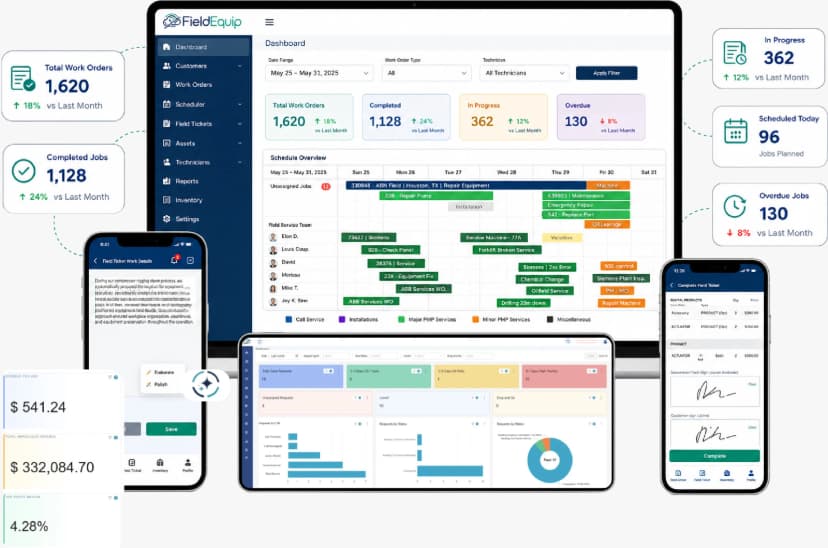
FieldEquip is a leading field service management platform to help organizations streamline and optimize their critical asset management. With real-time visibility, predictive maintenance powered by IoT, and intelligent work order management, FieldEquiphelps consistently monitor and maintain critical assets, ensuring they remain operational.
By leveraging FieldEquip, organizations can make informed decisions, improve resource allocation, and ensure their most valuable assets are always running at peak performance.
Book your FieldEquip demo and experience the future of asset service management!
A Clearer Way to Run Field
Service Operations
Field service challenges are not just operational. They directly affect cash flow, billing accuracy, and scalability.
Schedule a Demo