Equipment Rental • 4 mins read
Best Practices For Managing Rental Equipment Tracking, Availability, And Inventory

FieldEquip
Last Updated: January 29, 2026

A double-booking on a high-value downhole tool during peak season means sending a customer to a competitor, and rarely getting them back.
When managing specialized rental tools, even small inefficiencies can lead to costly downtime, missed rental opportunities, and dissatisfied customers. Maximizing utilization while meeting high customer expectations requires precision, adaptability, and the right digital tools.
The most common inventory failure in rental operations isn't losing track of where equipment is — it's not knowing it's available when a customer calls.
Critical Challenges in Managing Rental Equipment and Inventory
Managing rental equipment inventory is a delicate balance. Businesses must keep enough high-demand rental assets available while ensuring all equipment is in optimal working condition.
All without unnecessary spending.
Industries like oilfield, depend on specialized, high-cost rental tools and assets. They often find this balancing act especially challenging.
Let’s explore critical issues your rental equipment business is prone to experiencing.

Maintaining Inventory Levels for Peak Demand
One of the primary challenges rental companies face is ensuring an adequate stock of in-demand rental assets without overcommitting resources. Failing to align their inventory with peak demand can lead to revenue losses.
For oilfield rental equipment companies, a shortfall during peak seasons can erode customer trust and impact profitability. Here’s how:
- Customer Satisfaction: In industries with peak seasonal demand, such as construction in the spring and summer, keeping sufficient stock on hand is essential to meet customer needs and prevent turning business away.
- Lost Revenue Opportunities: Failure to meet peak demand not only leads to immediate revenue losses but also limits the chance to strengthen long-term customer relationships. Every lost rental is a missed opportunity to build trust and encourage repeat business.
Keeping Equipment in Optimal Condition
Inventory management extends beyond keeping rental assets in stock. It’s also about keeping rental tools in top shape. Studies indicate that unplanned downtime costs businesses approximately $50 billion annually, with about 42% of downtime attributed to equipment failures.
When rental equipment is reliable and performs well, customers are more likely to return. However, if equipment fails frequently, customers may look elsewhere.
Real-Time Visibility and Tracking of Rental Equipment
Knowing precisely where every piece of rental equipment is, whether rented, undergoing maintenance, or reserved, is vital. Poor asset visibility and tracking can lead to several issues, such as:
- Overbooking and Availability Conflicts: When your teams do not update equipment availability in real time, you run the risk of overbooking. This can damage both profitability and reputation. Customers needing oilfield rental equipment for time-sensitive projects expect dependable availability. Failure to deliver can drive them to competitors.
- Underutilization of Assets: Without proper rental equipment tracking software, companies miss out on maximizing returns, leaving high-demand rental assets idle. Real-time tracking helps ensure that all assets are used optimally.
- Customer Satisfaction and Trust: Rental customers who get real-time availability information book faster and dispute invoices less — both reduce your team's administrative load. When renting equipment, customers expect accurate availability information. Any discrepancies in this information can damage the trust they have in a provider. Thus, the lack of real-time visibility can damage customer satisfaction and retention.
Accurate Demand Forecasting
For rental companies, maintaining a precise balance between supply and demand is essential to avoid both overstocking and understocking. Both of these can erode profits.
Demand forecasting uses historical usage patterns and seasonal data to align inventory with upcoming demand — preventing both the shortfall that loses a rental and the overstock that ties up capital. Yet even slight errors can lead to either overstocking or understocking, each with significant financial repercussions.
But demand forecasting isn’t that simple. Sometimes, historical data alone isn’t enough.
Markets for rental equipment, especially in sectors like Oil and Gas, can be highly volatile, with demand swings influenced by unpredictable factors such as economic shifts, seasonal cycles, and unexpected project needs. Deloitte reports that this market variability complicates the accuracy of demand planning, especially for high-value equipment
Historical data can also be insufficient or unreliable in periods of change. For instance, past data might not account for shifts in the rental market caused by new technology, regulatory changes, or other external variables. Demand forecasts based solely on historical data could miss these market nuances, leading to inventory imbalances
Training Staff in Digital Inventory Management
Digital systems streamline rental inventory tracking, scheduling, and maintenance. Unfortunately, without proper training of your staff, they can introduce new errors, create bottlenecks, and limit productivity.
Adoption rates for new field software drop without structured onboarding — the training investment pays back in data quality. Staff unfamiliar with digital systems make data entry errors that compound over time, creating inventory records no one fully trusts.
For companies implementing new systems, staff resistance to change can be a significant barrier. Employees may be hesitant to adopt new technology due to unfamiliarity. This can cause employees to revert to manual processes, ultimately reducing the potential benefits of rental asset tracking software.
Managing Customer Relationships and Communication
Digital tools have raised customer expectations for communication speed and transparency alongside everything else.
This shift requires companies to balance personalized service with efficient communication processes that can address customer needs proactively.
According to Salesforce, 84% of customers value consistent, transparent interactions as much as the actual services they receive.
In the rental sector, equipment status and maintenance can directly impact project timelines. Therefore, customers expect rental companies to provide real-time updates on equipment availability, reservation status, and maintenance schedules.
In addition, rental companies often involve multiple departments, and each interacts with customers at different stages of the rental lifecycle. This fragmented approach can lead to miscommunication, where customers receive inconsistent or conflicting information.
When sales, operations, and billing teams work from different systems, customers get inconsistent answers — and dissatisfaction follows.
Best Practices to Optimize Rental Equipment Tracking and Availability

1. Utilize Data for Demand Forecasting
Accurate demand forecasting is essential for rental companies that want to meet customer needs without overextending their inventory. By leveraging historical data and customer feedback, companies can offer seamless scheduling, optimize rental equipment availability, and ensure efficient use of resources.
Analyze Historical Data to Identify Demand Patterns
Historical data allows companies to track usage trends and identify patterns. By analyzing data over time, rental companies can anticipate peak rental periods, such as seasonal demand spikes or annual industry events, and ensure that high-demand items are available accordingly.
McKinsey’s research shows that companies that use demand forecasting to predict seasonal fluctuations can reduce inventory-related costs by up to 30%.
By recognizing consistent patterns, companies can avoid both understocking during busy periods and overstocking during slower times. For example, equipment used outdoors may see higher demand in summer. Meanwhile, demand for oilfield tools might increase during specific industry cycles. Real-time forecasting allows for timely adjustments to inventory and reduces holding costs while improving service reliability.
Demand forecasting also aids in scheduling rentals to meet predicted demand. By aligning availability with projected rental periods, companies can reduce idle time and increase equipment utilization rates.
Tracking Customer Feedback and Preferences
Understanding customer preferences and capturing feedback enables companies to anticipate demand shifts beyond seasonal patterns. Customer data, such as preferred equipment types, rental frequency, and specific project needs, helps companies tailor their inventory to better serve their core client base.
Rental companies operating in sectors like oil and gas can use customer feedback to detect shifts in equipment preferences. For instance, if customers increasingly favor eco-friendly or IoT-enabled tools, companies can adjust their inventory accordingly.
Customer data can also reveal unmet demand for specific items and point to potential areas of expansion. Thus, companies can adjust their offerings to cater to emerging needs, ensuring they remain competitive in a dynamic market.
2. Implement Advanced Inventory Management Software
Inventory management software includes real-time dashboards, automated alerts, and digital invoicing. All of these can contribute to a more organized, responsive, and productive workflow.
Real-Time Dashboards for Visibility and Control
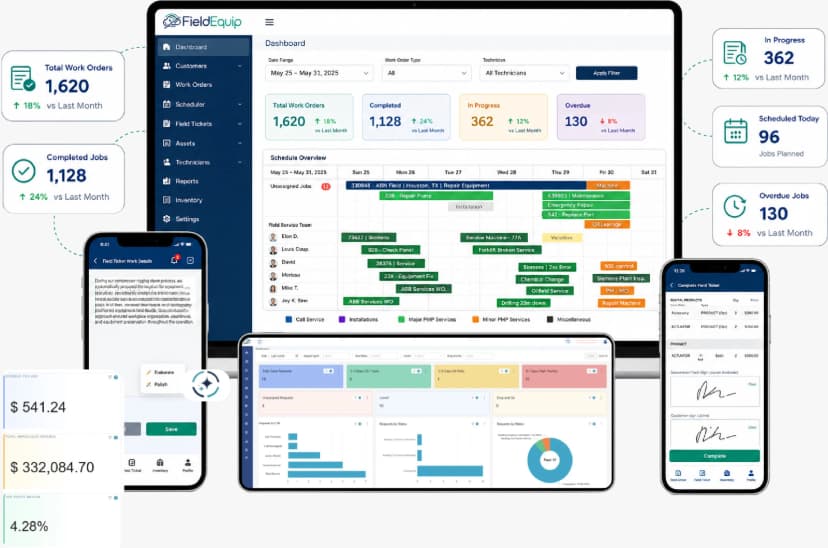
A core feature of rental equipment tracking software is the real-time dashboard. It allows rental companies to monitor the status, location, and availability of serialized and non-serialized rental tools across multiple sites.
Equipment rental companies can see what is currently rented, reserved, or available and optimize asset utilization accordingly. This immediate access to information reduces the risk of overbooking, underutilization, and other inventory misalignments.
With instant access to data, managers can also make informed decisions on the fly. They can reallocate equipment based on changing demand or updating availability schedules in real time.
Automated Alerts for Proactive Management
Automated alerts notify managers of important events, such as overdue returns, upcoming maintenance, or low stock levels. This feature is particularly useful in the rental industry, where delays or missed maintenance can impact both equipment performance and customer satisfaction.
In addition, alerts for scheduled maintenance help prevent equipment failures by ensuring on-time servicing. Deloitte’s research highlights that predictive maintenance can reduce equipment downtime by up to 20%.
Tracking Rental Asset History
Tracking each rental asset’s history, including information on past, rental locations, and maintenance or service history, is vital. It ensures equipment longevity and improves customer insights.
Rental asset tracking software can provide records of each asset’s rental history. This allows companies to analyze usage patterns and predict maintenance needs more accurately, reducing downtime and enhancing service reliability.
Tracking Internal Cost of Equipment Returns
For an effective return process, tracking the internal costs of moving equipment from customer locations back to the yard is crucial. This helps companies understand and manage the logistics costs of each return, especially for larger or more complex equipment.
By integrating cost tracking into rental management software, companies can gain better visibility into transportation expenses and adjust strategies to reduce these costs when possible.
Digital Invoicing for Streamlined Billing
Digital invoicing automates the billing process, reducing manual errors and speeding up payment cycles. Integrated invoicing features enable rental companies to automatically generate and send invoices upon equipment check-in or check-out. This can decrease billing errors and lead to a faster average payment time.
Automated invoicing improves transparency. It provides customers with clear, timely billing information and reduces the back-and-forth over billing questions. Customers can easily see a breakdown of charges, which builds trust and enhances the overall customer experience.
Finally, digital invoices create a paperless record-keeping system. They simplify audits and ensure all transactions are accessible for future reference. This can save on administrative costs and improve process accuracy.
3. Categorize Rental Equipment for Streamlined Management
Efficiently categorizing rental equipment streamlines inventory management. There are several benefits to organizing equipment by type, usage, or demand level:
- Enhanced Access and Retrieval: Categorizing equipment by type or usage simplifies the process of locating specific items. According to McKinsey, companies that implement logical categorization see up to a 25% improvement in operational efficiency.
- Improved Demand Responsiveness: Demand-based categorization helps companies ensure that high-demand items are readily available. This leads to increased customer satisfaction and reduced opportunity costs from missed rentals.
- Optimized Maintenance Scheduling: Grouping inventory by usage frequency or asset lifecycle stage allows companies to prioritize maintenance schedules. Equipment that’s used frequently or has a higher chance of wear can be placed in a category that requires more frequent inspections. This can reduce downtime for serialized and non-serialized rental tools and improve asset longevity.
- Streamlined Inventory Management and Tracking: Categorization enabling management software to filter and display assets based on category. This simplifies record-keeping and reporting.
4. Offer Customer Self-Service Options
'Self-service portals cut inbound availability enquiries by removing the need for customers to call or email before making a reservation. By offering user-friendly portals and apps, companies can provide a more convenient, transparent experience for customers while simultaneously reducing administrative demands.
This approach not only meets evolving customer expectations but also improves overall operational efficiency. Here’s how:
- Enhancing Customer Satisfaction through Transparency and Convenience: Self-service tools give customers more control over their rental experience. They can independently view the availability of equipment and make decisions without waiting for administrative support.
- Reducing Administrative Overhead and Improving Operational Efficiency: By transferring routine tasks, like checking availability and reserving equipment, to self-service platforms, companies reduce the burden on their administrative teams. Thus, they can maximize the rental of equipment and free up staff to focus on more complex, value-added tasks.
- Streamlining Bookings and Payments: Self-service platforms often integrate digital invoicing and payment systems. This not only speeds up the rental process but also reduces the likelihood of billing errors, which further enhances customer satisfaction and minimizes disputes.
- Improving Data Accuracy and Record-Keeping: With customers entering their own rental details, the chances of miscommunication or data entry errors are lower.
5. Establish Effective Maintenance Protocols
Maintenance protocols are essential for rental companies to ensure equipment reliability, minimize downtime, and extend rental asset lifespan.
Routine and Preventive Maintenance
Routine maintenance involves regular checks and servicing based on usage or time intervals. In the meantime, preventive maintenance anticipates potential failures before they occur. Together, they reduce breakdown frequency and keep rental schedules intact.
According to Deloitte, companies that transition from reactive to preventive maintenance see up to a 25% reduction in unplanned downtime. This translates to more efficient operations and higher equipment availability.
Quality Control on Equipment Returns
A structured quality control process ensures rental equipment is in optimal condition for the next rental. Quality checks help identify any damage, wear, or necessary repairs, enabling rental companies to keep equipment in excellent working order and avoid sending out faulty items.
In addition, keeping a record of inspection results, maintenance history, and any repairs needed allows companies to track each asset’s condition over time.
6. Setting Inventory Stock Levels
Establishing appropriate minimum and maximum stock levels is essential for rental companies to avoid the pitfalls of shortages or overstocking. By aligning stock levels with demand forecasts, companies can not only enhance their operational efficiency but also reach sustainability targets.
Minimum and Maximum Stock Levels
Setting optimal minimum and maximum stock levels helps rental companies prevent both excess inventory costs and the risk of running out of high-demand rental tools.
Establishing minimum levels ensures that rental companies have a safety buffer for high-demand items. This buffer, based on historical usage patterns and anticipated demand, helps prevent stockouts that can result in missed rentals and revenue loss.
Meanwhile, maximum stock levels help avoid tying up capital in excess inventory that may sit idle. It also prevents over-investment in inventory that may not be used frequently.
Environmental Impact Considerations
Beyond operational efficiencies, inventory management contributes to meeting sustainability targets and complying with regulations. Rental companies that closely monitor their stock levels can cut down on storage and transportation needs, both of which consume significant energy.
Build a Sustainable Rental Management System with FieldEquip
Comprehensive asset and rental inventory management practices not only increase your equipment rental business’s day-to-day efficiency but also build a more adaptable and resilient operation.
Integrating advanced software solutions, such as FieldEquip, helps you monitor rental asset history, track logistics costs, and organize your equipment by warehouse or yard location to keep operations smooth.
This helps you remain competitive and continuously meet the evolving expectations of customers and industry standards.
Want to manage all your rental equipment inventory management needs in a single place? Schedule a FieldEquip demo to see how you can benefit.
A Clearer Way to Run Field
Service Operations
Field service challenges are not just operational. They directly affect cash flow, billing accuracy, and scalability.
Schedule a Demo