Oilfield Services • 6 mins read
Improving Workforce Productivity in the Oil and Industrial Field Services

FieldEquip
Last Updated: August 19, 2024

The oil and industrial field services sectors rely heavily on a skilled workforce and advanced technologies to maintain efficiency and competitiveness.
Workforce productivity is paramount in these sectors due to the demanding nature of field operations and the high stakes involved. Boosting it not only reduces operational costs but also improves service delivery and increases profitability.
Let's look into how you can achieve that.
Current Challenges Affecting Workforce Productivity in the Oil and Industrial Field Services
In the oil and industrial field services industry, several key obstacles hamper workforce productivity. These can negatively affect operational efficiency and profitability.

Communication Gaps
One of the most significant challenges in field services is poor communication between field technicians and back-office staff. In many cases, communication relies on outdated methods such as phone calls, emails, or paper reports. They can lead to misunderstandings and delays.
Due to that, field technicians may not receive timely updates or clear instructions. It can result in job completion delays, incorrect data entry, and poor efficiency.
Poor communication can lead to extended job completion times and inaccuracies in work execution. Meanwhile, miscommunication can result in unnecessary repeat visits, further increasing operational costs and reducing customer satisfaction.
By improving communication channels, employers can ensure that field technicians have the information they need. So, they can perform tasks accurately and efficiently, reducing delays and enhancing overall workplace productivity.
Manual Work Order Management
Management of work orders remains a manual process in many organizations. It is prone to errors and inefficiencies, as it greatly relies on human input and lacks integration with modern digital systems.
Managing work orders with outdated systems can lead to resource misallocation, scheduling conflicts, and incomplete documentation.
The consequences of poor work order management include increased operational costs, delayed service delivery, and reduced workforce productivity. Inefficient work order processes can also lead to dissatisfied customers, as delays in service affect their operations and business outcomes.
Lack of Real-Time Collaboration
Without real-time communication and collaboration, field technicians and back-office teams struggle to share critical information promptly. This lack of immediate access to data can lead to slow decision-making, reduced responsiveness to on-site challenges, and hindered problem-solving.
Delays in information sharing can severely impact productivity. Technicians may need to wait for approvals or additional instructions before proceeding with their tasks. This can cause prolonged job completion times and missed opportunities for optimizing field operations.
With field service data collection tools, companies can facilitate seamless communication between teams. This can enable faster decision-making and improve overall efficiency.
Key Strategies to Improve Workforce Productivity
Field management software and streamlined processes can drive efficiency and improve workforce productivity. Here's how:

1. Leveraging Mobility Solutions
Mobile apps for field service management have revolutionized how field technicians and managers communicate and collaborate. They provide technicians with real-time access to work orders, customer information, and essential data. This allows them to perform tasks more efficiently and accurately.
As a result, technicians can quickly receive updates, access service history, and capture data on-site. This reduces the need for follow-up visits and minimizes errors. Real-time connectivity enables technicians to make informed decisions, complete tasks faster, and enhance customer satisfaction.
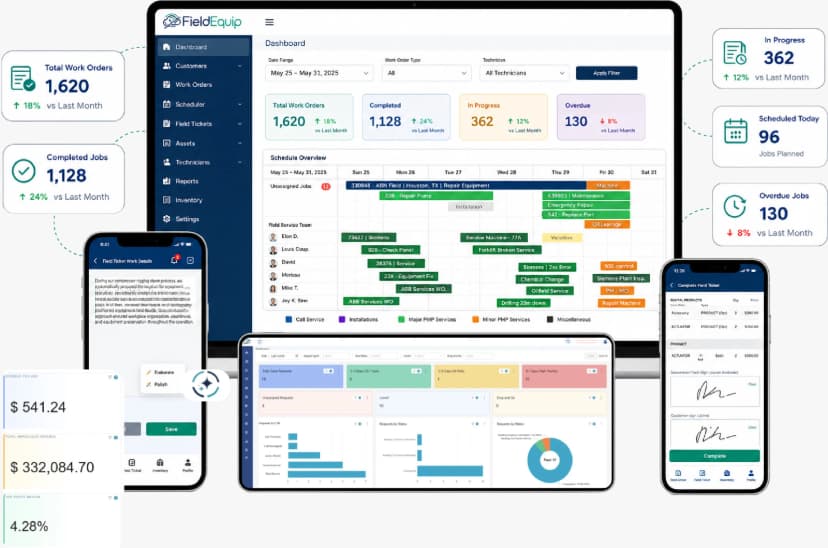
For example, companies that have implemented mobile workforce time tracking solutions like FieldEquip’s intuitive mobile app have reported significant productivity gains. They have improved job completion times, reduced operational costs, and enhanced service quality.
2. Enhancing Collaboration Tools
Implementing automated workflows is another effective strategy for improving workforce productivity. Automated workflows reduce manual intervention and facilitate seamless interaction between field technicians and back-office teams. This minimizes delays and ensures that employees complete tasks efficiently and accurately.
Integrating back-office and field operations on a single platform further enhances collaboration. Platforms like FieldEquip empower technicians, dispatchers, and back-office staff to seamlessly work together, sharing information and updates in real time. This eliminates silos, improves engagement and communication, and enhances decision-making capabilities.
Companies that have adopted such tools report faster response times, reduced administrative burdens, and improved overall efficiency. By fostering a collaborative environment, organizations can ensure that their workforce operates at peak productivity.
3. Improving Visibility
Good visibility into operations is crucial for proactive decision-making and efficient resource management. Performance tracking tools and systems for automated service reporting and dispatching enable companies to monitor field activities. Thus, they can effectively allocate resources and swiftly respond to changes.
In addition, analytics tools process this data. They create insights into operational trends and help organizations make informed decisions.
IoT and analytics contribute to improvements in equipment reliability and operational efficiency and reduced maintenance costs. Organizations can also anticipate problems, proactively schedule maintenance, and ensure continuous operations.
Practical Tips for Implementation
To make the most out of advanced technologies, you need careful planning and execution. Here are some practical tips to ensure that you can adopt new technologies and processes smoothly and effectively:
Training and Onboarding
Implementing new technologies requires comprehensive training programs to ensure that employees can effectively use the new tools. These programs should focus on demonstrating the benefits of the new systems and providing hands-on experience to build confidence among users.
One critical factor in the success of technology adoption is the user-friendliness of the interface. Workforce time management tools with intuitive and straightforward interfaces can significantly reduce training time and facilitate a smoother transition.
FieldEquip, for instance, offers a modern, user-friendly mobile app. It requires minimal training, allowing technicians to quickly adapt to new workflows and improve productivity from day one.

Incremental Integration
You should always integrate new workforce management software and systems incrementally to minimize disruption and ensure a seamless transition. A phased approach allows companies to implement changes gradually, providing employees with the time needed to adapt and become proficient with the new technologies.
Strategies for incremental integration include starting with pilot programs to test the new tools in specific areas or departments. Feedback from these initial implementations can then guide broader rollouts, ensuring that you can address any issues before full-scale deployment.
By adopting a phased approach, organizations can mitigate risks, minimize downtime, and enhance the likelihood of successful integration.
Continuous Monitoring and Feedback
Continuous monitoring of productivity metrics is essential to evaluate the effectiveness of new technologies and processes. By regularly tracking key performance indicators (KPIs), organizations can identify areas that require improvement and make data-driven decisions to enhance efficiency.
Feedback loops are also vital. Establishing channels for employees to provide feedback on new tools and processes can help organizations identify challenges early and make necessary adjustments.
Encouraging open communication and acting on feedback fosters a culture of continuous improvement. It ensures that you can sustain productivity gains over the long term.
Improve Workforce Productivity with FieldEquip
In the oil and industrial field services industry, enhancing workforce productivity is essential. It helps maintain competitiveness and achieve operational excellence.
By leveraging modern technologies, companies can overcome common challenges and drive performance and productivity improvements.
FieldEquip offers comprehensive solutions that address the unique challenges of the field services industry. Schedule a FieldEquip demo and discover how our innovative tools can help you achieve sustained productivity improvements.
More Articles for You:
A Clearer Way to Run Field
Service Operations
Field service challenges are not just operational. They directly affect cash flow, billing accuracy, and scalability.
Schedule a Demo