Industrial Asset Services • 6 mins read
Streamlining In-Shop Asset Repairs: 8 Best Practices For Increased Efficiency

FieldEquip
Last Updated: October 18, 2024

In-shop asset repair and management aren’t just about fixing broken equipment. They help maximize operational efficiency and minimize costly downtime.
Industrial companies thrive on equipment uptime. Every minute of delay, every piece of equipment offline, costs your business productivity and profitability.
Efficient repair processes are your competitive advantage.
That's why smart businesses are turning to streamlined, technology-driven solutions. The focus isn’t only on quick fixes but on preventative maintenance, optimized inventory, and precise diagnostics. When your team can predict issues, resolve them faster, and ensure assets stay at peak performance, your entire operation benefits.
It's time to leave reactive maintenance behind.
Let’s explore the best practices of in-shop asset repairs and management cutting-edge tools and platforms like FieldEquip, you can seamlessly integrate real-time data, advanced diagnostics, and predictive analytics into your workflow—ensuring that your operations run smoothly, safely, and efficiently.
What Are In-Shop Asset Repairs and Management?
In-shop asset repairs and management encompass all processes involved in maintaining, repairing, and optimizing equipment within a controlled facility or workshop environment.
These operations are vital to ensuring that assets are fully functional. They minimize downtime and maximize overall operational efficiency. Both directly impact your organization's productivity and profitability.
For industrial businesses, equipment uptime is critical. Therefore, having streamlined repair processes is non-negotiable.
Key Components of In-Shop Asset Repairs and Management:

1. Diagnosis and Troubleshooting
Timely and accurate fault diagnosis is essential for effective repair management. Quickly identifying the root cause of equipment issues allows teams to determine the best repair methods.
By leveraging advanced diagnostic tools and software, in-shop technicians can reduce or even eliminate guesswork, improving first-time fix rates as a result. Rapid troubleshooting not only saves time but also ensures that technicians can address the problem with precision. This reduces the likelihood of recurring issues and costly equipment failures.
2. Repair and Maintenance
Repair tasks can range from minor adjustments to full-scale overhauls. Alongside reactive repairs, preventative maintenance should be your priority. Regularly scheduled maintenance ensures that assets operate at peak performance and you keep unexpected breakdowns that can disrupt operations to an absolute minimum.
Using an asset management system like FieldEquip, your company can automate maintenance schedules based on equipment usage, condition, or manufacturer guidelines. You can rest assured that no critical service is missed. With this proactive approach, you can expect fewer emergency repairs and lower both operational costs and downtime.
3. Inventory Management
Efficient inventory management minimizes delays in repair operations. When technicians have immediate access to necessary parts, tools, and materials, repair processes are significantly faster.
To avoid stockouts or excess inventory, consider integrating a robust inventory management system that connects with existing ERP platforms. This ensures that parts arrive in time, eliminating storage costs while maintaining a high level of readiness.
Predictive analytics are also beneficial. Your teams can use them to forecast demand for specific parts, reducing lead times and improving overall efficiency in the process.
4. Documentation and Record-Keeping
Keeping detailed records of all repair activities, asset performance, and maintenance schedules is vital for data-driven decision-making. Digital platforms enable real-time data capture and documentation, which technicians, back-office personnel, and decision-makers can access.
This transparency ensures accurate tracking of equipment lifecycles and helps operations managers make informed decisions about when to repair, replace, or upgrade assets. Comprehensive record-keeping also ensures all actions are well-documented and traceable which helps remain compliant with safety regulations and audits.
5. Workforce Management
Effective workforce management is integral to the success of in-shop repairs. This includes assigning the right technicians to the right tasks based on their expertise, experience, and availability. With a field service management platform like FieldEquip, operations managers can use intelligent scheduling tools to assign technicians efficiently, ensuring minimal downtime and improved service quality.
In addition, invest in continuous training for technicians to keep them up to date with new repair techniques and technologies, especially as assets become more complex. Empowering technicians with mobile tools that provide access to repair manuals, parts catalogs, and real-time updates allows them to be more effective in their roles.
6. Process Optimization
Standardizing workflows and optimizing repair processes are essential for boosting efficiency in the shop. Implement clear Standard Operating Procedures (SOPs) for different types of repairs to ensure consistency and reduce the risk of errors and rework.
Additionally, automation and real-time tracking can further streamline operations. FieldEquip’s automated workflows enable seamless collaboration between technicians, back-office teams, and customers. This helps ensure that all parties are on the same page and up to date. It also leads to faster repair times, improves resource allocation, and enhances service quality.
7. Technology Integration
Technology is a key enabler of efficiency in in-shop repair processes. From mobile apps that technicians can use to access work orders, asset histories, and repair manuals in real-time to predictive analytics that help forecast maintenance needs, technology allows operations to shift from reactive to proactive management.
FieldEquip’s IoT-enabled solutions, for example, can collect real-time data from equipment, identifying issues before they lead to breakdowns. This enables predictive maintenance as well as reduces unplanned repairs and downtime and extends asset life.
Why It Matters: The Strategic Advantage
For industrial companies, inefficiencies in in-shop asset repair can lead to costly delays, unplanned downtime, and reduced profitability. By optimizing these processes, companies can:
- Maximize Asset Uptime: Preventative maintenance and rapid repairs ensure that equipment is always available when necessary. This directly contributes to higher productivity levels.
- Enhance Operational Efficiency: Streamlined workflows, automated scheduling, and real-time data capture reduce turnaround times. As a result, they also improve overall operational efficiency.
- Reduce Costs: Predictive maintenance, inventory optimization, and data-driven decision-making lower operational costs. They reduce emergency repairs, minimizing excess inventory, and extending asset lifecycles.
- Improve Safety and Compliance: Well-documented maintenance activities ensure compliance with industry safety standards. Thus, you can protect you company from legal risks and potential fines.
Best Practices for Streamlining Asset Management
Effectively managing in-shop asset repair is vital for maximizing productivity, reducing downtime, and maintaining equipment performance. Efficient practices can save significant operational costs, reduce maintenance time, and increase overall efficiency.
Here are proven best practices to streamline the process:

1. Implement a Robust and Centralized Asset Tracking System
A centralized asset management system is essential if you wish to reduce downtime and maintenance costs. According to research from Deloitte, predictive maintenance systems, which form a key part of centralized asset management, can:
- Reduce maintenance planning time by 20-50%,
- Increase equipment availability by 10-20%, and
- Lower maintenance costs by 5-10%.
Opt for an advanced platform like FieldEquip, that can:
- Track repair orders, parts inventory, and technician availability,
- Provide real-time condition monitoring to optimize decision-making, and
- Enable better resource allocation based on asset lifecycle data.
As a result, you can enjoy improved visibility, efficient resource management, and greater equipment uptime, and productivity gain.
2. Establish Clear Standard Operating Procedures (SOPs)
Creating well-defined SOPs can ensure consistent and high-quality repairs. Detailed step-by-step procedures for common repairs ensure that technicians follow the same steps every time, improving efficiency and quality control.
Research shows that companies with standardized workflows not only reduce repair time by up to 40% but also minimize errors.
3. Optimize Parts and Inventory Management
Poor inventory management can cause significant delays in repairs. Meanwhile, accurate forecasting methods and real-time inventory tracking reduce stockouts and ensure timely availability of critical components.
Using field inventory management software that integrates with ERP platforms helps streamline parts management, reduce excess inventory, and control costs. This approach not only speeds up repairs but also optimizes resource usage, saving time and money.
4. Provide Ongoing Training to Improve Staff Expertise
Ensure that technicians have the skills necessary to work with the latest technology. We’ve observed that continuous training can improve technician performance by as much as 25%.
This directly enhances repair efficiency and reduces equipment downtime. Trained technicians proficient in asset management software tend to complete repairs faster, further minimizing operational disruptions
5. Foster a Safety Culture
A robust safety culture significantly reduces workplace accidents. Training asset repair technicians in safety procedures and conducting regular safety audits helps avoid accidents that can lead to costly legal actions and downtime.
Regular safety audits and access to proper safety equipment not only protect employees but also contribute to smoother, uninterrupted operations.
6. Deploy Mobile Technology
Mobile technology has revolutionized asset management. Organizations that use mobile applications to manage field operations see significant productivity gains. Technicians with mobile access to repair manuals, work orders, and parts catalogs can troubleshoot issues on-site. This leads to faster repair completion and lower expenses.
Mobile apps also enable real-time data capture. Thus, they reduce errors and ensure accurate record-keeping, which can then be shared seamlessly across teams.
7. Track Key Performance Metrics
To continuously improve your asset management operations, monitor key performance indicators (KPIs). Some relevant KPI examples include:
- Average repair time
- First-time fix rate (FTFR)
- Customer satisfaction ratings
Data analytics helps identify areas for process improvement. Companies that effectively use KPIs and data-driven decision-making see immediate improvement in operational efficiency.
FieldEquip’s analytics platform provides real-time data on these metrics, allowing field managers to fine-tune operations.
8. Leverage Predictive Analytics and Maintenance
Predictive maintenance can reduce the instances of emergency repairs. By predicting equipment failures before they occur, organizations can schedule repairs in advance, reducing both downtime and maintenance costs.
FieldEquip's IoT-integrated platform uses predictive analytics to optimize maintenance schedules, helping businesses save money and prevent costly breakdowns.
Optimize Asset Management Through Technological Integration
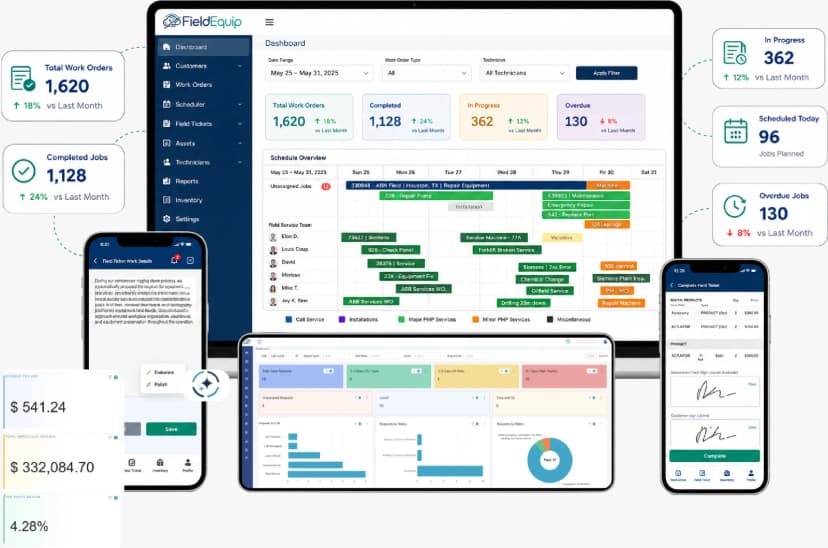
With FieldEquip’s next-gen field service management software, you can apply all these best practices within a single platform and digitalize your in-shop repair operations. FieldEquip brings mobile, web-based solutions that enable seamless communication between customers, technicians, and back-office teams.
The platform allows you to:
- Prioritize and track work orders
- Manage spare parts inventory with ease
- Optimize technician dispatch and workload
Schedule a demo to see how FieldEquip can transform your in-shop asset repairs, boost productivity and reduce operational costs.
A Clearer Way to Run Field
Service Operations
Field service challenges are not just operational. They directly affect cash flow, billing accuracy, and scalability.
Schedule a Demo